
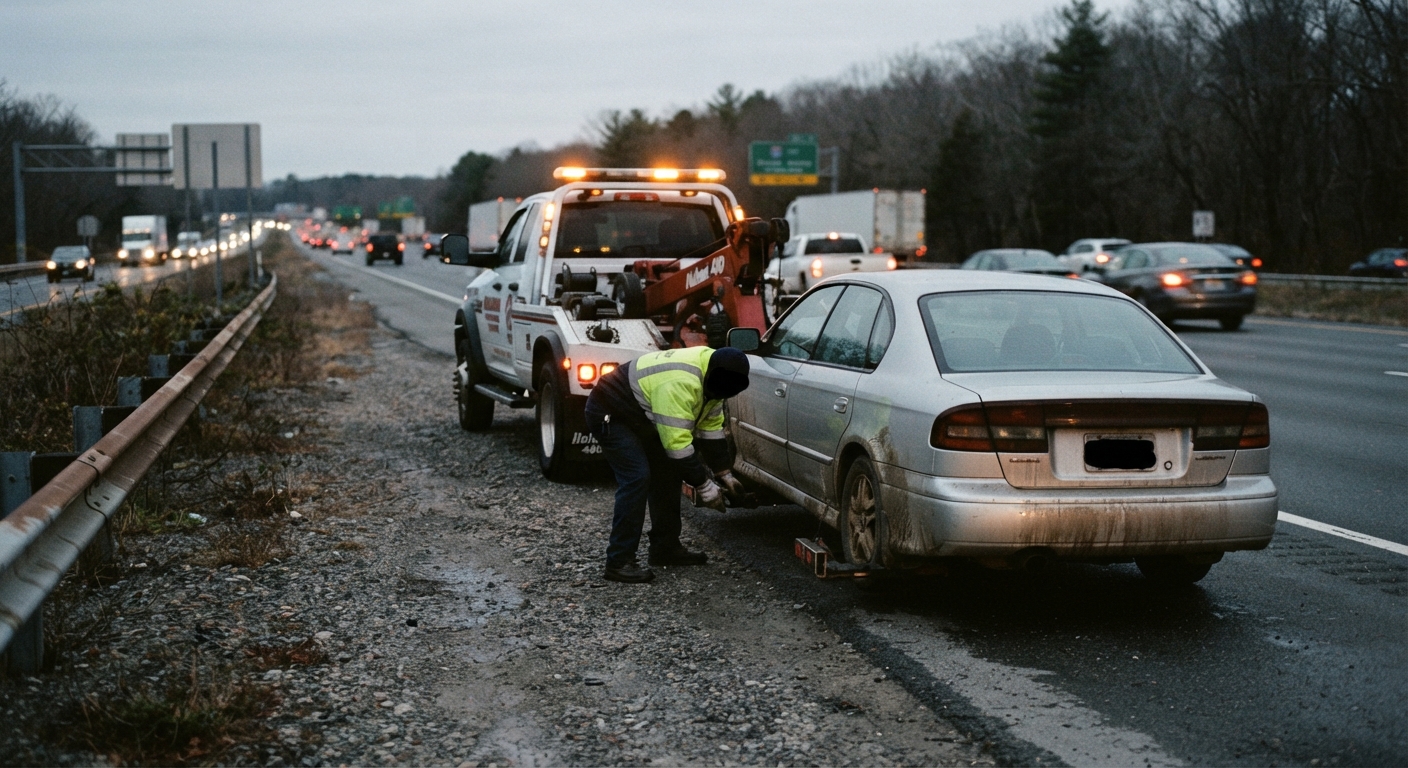
Most drivers assume a car insurance policy is a single package that handles anything related to the car. It is not. A standard auto policy is built from separate coverages, each answering a different question: who pays if you hit someone, who pays if your car is stolen, who pays if a tree falls on it. Coverages that feel like they should come with the package — a tow truck, a rental car, protection for the neighbor who borrows your car — are often separate line items that you have to ask for and pay for individually. Understanding why helps you read a quote without guessing.
Why some coverages feel standard but are not
Insurance is priced around risk that can be measured. Liability coverage, which pays for injury or property damage you cause to someone else, exists in some form on nearly every policy because it is tied to a legal requirement to drive. Because it is required, drivers assume everything else attached to the policy is required too. It is not. Coverages like roadside assistance or rental reimbursement are optional add-ons that insurers offer because many drivers want them, not because a law or a lender demands them.
There is also a habit carried over from other kinds of insurance. A homeowner’s policy often bundles several protections into one price, so people expect a car policy to work the same way. Auto policies are itemized instead. Each coverage has its own limit — the maximum the insurer will pay — and sometimes its own deductible, the amount you pay out of pocket before the coverage applies. If a coverage is not listed on your declarations page, the page that summarizes what you bought, it is not part of your policy, no matter how commonly other drivers seem to have it.
The practical result is that two drivers with the same insurer, same car, and same liability limits can have very different experiences after a breakdown or a claim, simply because one of them added coverages the other skipped. Reading the declarations page line by line, rather than assuming a “full coverage” quote includes everything, is the only reliable way to know what you actually bought.
Roadside assistance: what it is and how it is billed
Roadside assistance is coverage for the moment your car stops working somewhere other than a repair shop. It typically pays for a tow to the nearest qualified shop, a jump start for a dead battery, help changing a flat tire, fuel delivery if you run out of gas, and sometimes lockout service if you are locked out of the car. It does not pay for the repair itself. It pays for getting the car, and you, out of the situation.
Two things surprise people about how this coverage works. First, it is usually a per-incident coverage with a dollar limit, not an unlimited service. If a tow costs more than the limit — which can happen with a long-distance tow or a heavy vehicle — you may owe the difference. The limit is stated on the declarations page or the policy document, and it is worth checking rather than assuming a tow is fully covered no matter the distance.
Second, and often more surprising, roadside assistance is frequently billed as a reimbursement rather than a dispatch-and-forget service. Depending on the insurer and the specific product, you might pay the tow company directly and submit a claim afterward, or you might call a number on your insurance card and have the insurer coordinate the tow with no cash changing hands at the scene. Some insurers offer both models depending on the plan you selected. If you are stranded and unsure which kind of coverage you have, calling the number on your insurance card before calling an independent tow company is usually the safer first step, because it lets the insurer tell you how the claim will be handled before you pay anything.
Roadside assistance is also sometimes confused with towing coverage tied to a comprehensive or collision claim, which is different. If your car is towed because it was in a collision, that tow may be handled under your collision coverage rather than a separate roadside assistance add-on, and the rules and limits can differ. When in doubt, ask your insurer or agent which coverage would apply to a given situation, since the same word — “tow” — can point to two different parts of the policy depending on why the car needs to move.
Rental reimbursement: what it pays for while your car is being repaired
Rental reimbursement coverage pays for a substitute vehicle while your car is in a shop after a covered claim. The word “covered” matters here: rental reimbursement only applies if the reason your car is in the shop is something your policy already covers, such as a collision or a comprehensive claim for damage like hail or a break-in. It is not a general-purpose rental benefit. If your car needs routine maintenance or a repair that has nothing to do with a claim, rental reimbursement does not apply, because there is no underlying covered claim for it to attach to.
This coverage usually has two limits working at the same time: a daily maximum, meaning the most the insurer will pay per day toward the rental, and a total maximum, meaning the most it will pay for the whole rental period regardless of how long the repair takes. If your daily rental costs more than the daily maximum, you typically pay the difference yourself. If the repair drags on past the point where the total maximum is used up, the coverage stops paying even if the car is still in the shop. Both numbers are set when you choose the coverage and are shown on the declarations page, so they are worth checking against what a rental actually costs in your area rather than assuming the coverage will fully absorb the cost.
Rental reimbursement is also distinct from a “loss of use” claim you might pursue against someone else’s insurer if they were at fault. That is a different process involving another driver’s liability coverage, not your own rental reimbursement coverage, and the rules for how it works are separate. If you are not sure which situation you are in — using your own rental coverage versus seeking reimbursement from the other driver’s insurer — your claims adjuster, the person handling your claim, can tell you which applies and what documentation, such as a rental receipt, they will need.
One more distinction worth knowing: rental reimbursement is not the same as a “replacement vehicle” or a guarantee of a car similar to your own. Most rental reimbursement coverage pays a set dollar amount per day toward a rental, and what class of car that money gets you at a rental counter depends on the rental company’s pricing at the time, not on the make or model of the car being repaired.
Unlisted drivers: why a policy may not cover every driver in your household
An auto policy is written around specific named people, not just a specific car. When you apply for a policy, the insurer asks who lives in your household and who regularly drives the insured vehicle. Those people become listed drivers on the policy, and the insurer prices the policy based on their driving records, ages, and experience. A driver who is not listed can create a coverage gap, especially if that person drives the car regularly rather than occasionally.
Most policies distinguish between someone borrowing your car for a single trip with your permission — which is usually still covered under what insurers call permissive use — and someone who lives in your home and drives the car on a regular basis without being listed on the policy. The second situation is the one that causes problems. Insurers generally expect you to disclose regular drivers in your household, such as a teenager who just got a license, a partner who moved in, or an adult child who uses the car for a daily commute. If that person is in an accident and the insurer later discovers they were a regular driver who was never disclosed, the insurer may treat the claim differently than it would have if the driver had been listed from the start, because the policy was priced without that person’s risk factored in.
This is different from an occasional guest driver, like a friend who drives your car once while visiting, which most policies handle without requiring that person to be added. The line between “occasional” and “regular” is not always a fixed number of days written into every policy, so if someone in your household is driving your car with any frequency, the more reliable approach is to ask your insurer directly whether that person needs to be added, rather than guessing where the line falls.
Household member exclusions work in the other direction too. Some households specifically exclude a driver — for example, a family member with a separate policy of their own, or someone whose driving record would raise the cost significantly. An excluded driver is not covered under that policy under any circumstances, even for a single trip, so it is worth knowing whether anyone in your household has been explicitly excluded, and making sure that person understands they should not drive the insured car at all.
Because listed and excluded drivers directly affect what a policy will pay for, this is one of the few places where a phone call before a problem happens is more useful than reading the fine print after one does. Insurers can tell you, in plain terms, who is currently listed on your policy, who is excluded, and what the process is for adding someone new — whether that is a household member who just got licensed or a partner who is moving in and will be using the car.
Reading a quote with this in mind
None of these coverages are hidden. They are itemized, usually with a short description and a price, on the same page where liability and collision coverage appear. The reason they surprise people is not concealment; it is the assumption that a car insurance policy works like an all-inclusive package rather than a list of separate choices. When you are reading a quote, it helps to treat each line as its own yes-or-no decision: do you want coverage for a tow, do you want coverage for a rental car while yours is repaired, and is everyone who regularly drives your car actually listed on the policy. Asking those three questions directly, either to yourself or to the person selling you the policy, is a faster way to find gaps than reading every clause of the contract.
